
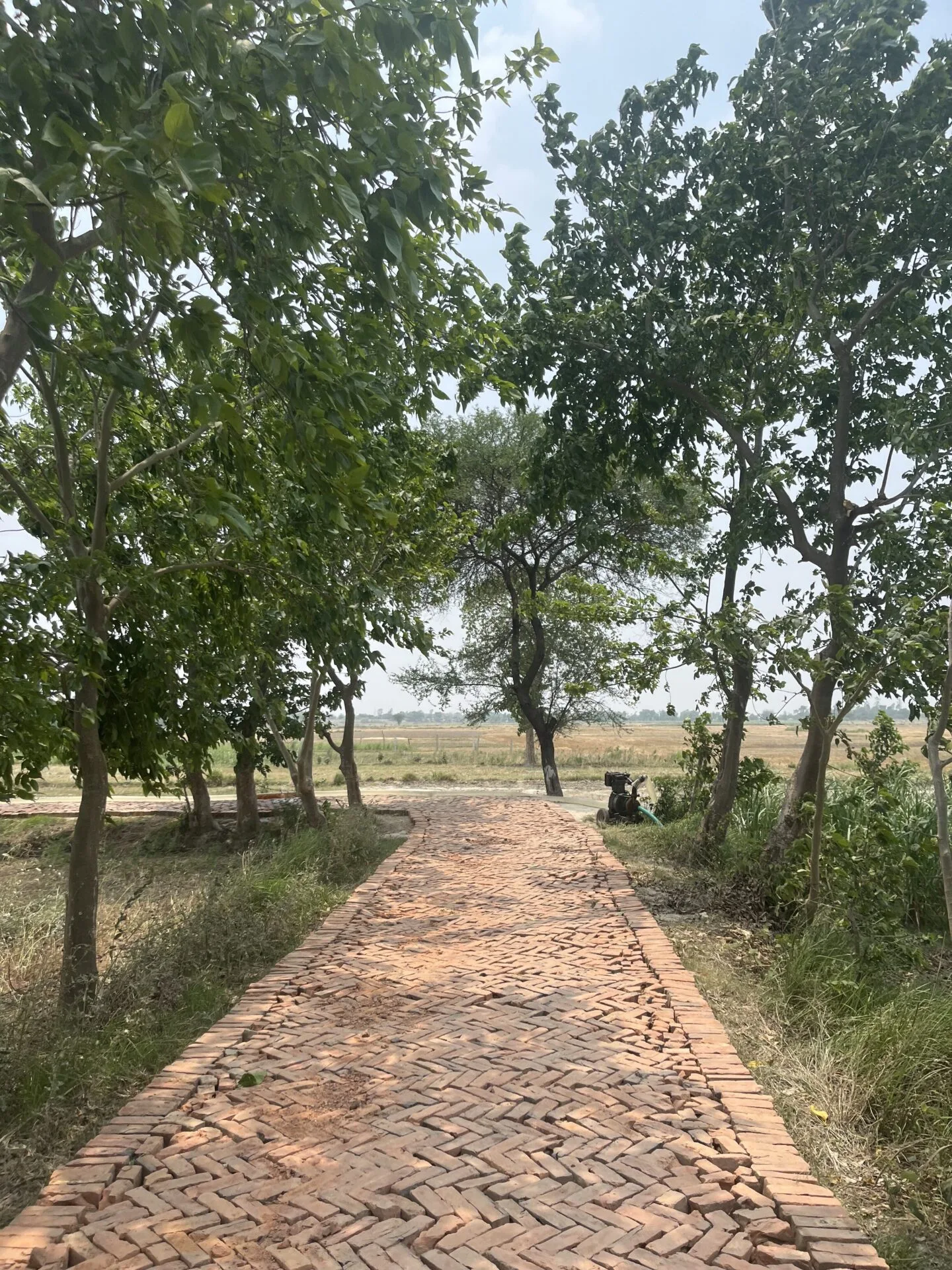
This blog features a guest post drawing on postgraduate field research carried out in rural Uttar Pradesh in 2025.
Participation & Empowerment:
Participatory development is widely promoted as an approach that actively engages local people, and project and programme ‘beneficiaries’, at every stage of design, implementation, monitoring, and evaluation. Emphasising collaboration and rooted in a desire to shift power from external ‘experts’ to community members and local populations, it highlights the importance of local knowledge, encourages for collective decision-making, and aspires to build capacities for selfdetermination.
However, the near universal appeal of participation can obscure its vulnerability to misappropriation, dilution, or tokenism. Feminist, postcolonial, and poststructuralist critiques remind us that participation is never neutral, and that without explicit attention to internal and intra-community power relations, initiatives that appear ‘inclusive’ on paper may, in practice, reinforce existing hierarchies by privileging some voices while marginalising others. It becomes crucial, therefore, to interrogate whether and how social hierarchies shape who is able to participate, whose voices are heard, whose perspectives carry weight, and who ultimately benefits or is excluded in the development process.
Research Context:
In response to these questions about the politics of participation, my study examined how marginalised groups experience and navigate participatory development processes in rural Uttar Pradesh, India. Using an inductive, social constructionist approach, the research explored how social hierarchies, cultural norms, and everyday power relations shape people’s engagement with community initiatives.
The study drew on 30 semi-structured interviews with local committee members and NGO staff. 27 of these participants were committee members, primarily women from Scheduled Caste and Other Backward Caste communities, across ten flood-prone villages. All were engaged in local community development activities facilitated by an NGO promoting inclusive, participatory practices. This setting provided a valuable opportunity to understand not only the intended aims of the participatory initiative but also how they are experienced and navigated in practice.
Findings & Key Takeaways:
Contrary to expectations derived from engagement with the literature on participatory development and regional development practice, the study found that caste had limited salience in this context, owing to local homogeneity combined with NGO’s deliberate emphasis on inclusive project design.
Instead, gendered norms emerged as the main force shaping participation. Engagement in committee work expanded women’s confidence, mobility, public speaking, and social recognition, transforming some from socially invisible actors into recognised community information brokers.
Though deeply meaningful, these gains also provoked resistance. Suspicion about travel, allegations of hidden benefits, and accusations of exclusion emerged. Notably, much of this policing came from other women, revealing participation as a contested space that simultaneously transforms and reproduces gendered hierarchies.
From this analysis, several key takeaways emerge:
- Participatory development efforts must grapple with internal power relations, particularly gendered social norms which can both empower and create resistance within communities. This highlights the complex nature of local governance where empowerment is not linear but contested and negotiated.
- Inclusion requires more than quotas, and must actively engage with social realities, anticipating backlash and fostering trust among diverse community members to sustain meaningful participation.
- Transparent governance and open communication matter within community committees. This is crucial to managing tensions and ensuring equitable benefit distribution, aligning with Geoformations’ goal of cantering contextuality, accountability, and justice in development governance and practice.
- Local contextual knowledge and social relations are central to effective development governance and practice. The findings here reinforce the importance of place-based knowledge in shaping collaborative governance. Understanding how people relate to one another, and how these relations change, remains critical for designing development initiatives that are both inclusive and effective.
Implications & Conclusion:
This study contributes to our understanding of participatory development, in theory and in practice, by demonstrating the paradox of empowerment-through-participation. The findings show that the very processes intended to empower women in this context simultaneously exposed them to new forms of scrutiny, social resistance and regulation.
These dynamics suggest that equitable participation cannot be a baseline assumption in development practice. Rather, it requires intentional design that anticipates potential backlash and addresses embedded power dynamics within communities. By identifying and mitigating the often-unseen social burdens, borne by participants, programmes can better support genuine community ownership and more meaningful and inclusive participation.
Fionn Casey Ó Siochrú is a recent graduate from the Master’s in Development Practice at Trinity College Dublin. He is passionate about participatory approaches to development and currently works as a Project Support Officer with ERD, alongside his role as a Social Researcher.