Introducing the pilot visit, situating the study:
In September of 2025 I embarked on a pilot field visit as part of my doctoral research journey. Travelling from Dublin to Dar es Salaam, Tanzania (which is the site of my research), my goal was to engage with civil society organisations working in the development space.
Broadly speaking, my PhD research explores the emergence, functioning, and governance of rights based civil society organisations within development cooperation.
In this blog, I reflect on 3 weeks spent in Dar es Salaam, paying particular attention to the methodological insights that emerged and to the ways in which these experiences have reoriented the direction of my research.
Taking this pilot trip was an important step within the context of my PhD research, and thus, my time in the field was guided by several objectives:
- To test and assess the practical feasibility and contextual relevance of my research questions, as well as the suitability of my broader methodological approach
- To establish relationships and begin building a network among civil society and development actors working in Tanzania
- To familiarise myself with the local and national context in preparation for future research visits
Reflections from the field:
I left Ireland feeling both excited and apprehensive. I’d spent the summer before preparing for this visit from my desk in Dublin. This involved extensively mapping actors and organisations, reviewing relevant literatures, and reaching out to potential collaborators on the ground. Initially, responses were slow to arrive, and I began to doubt whether civil society organisations would be interested in or willing to engage with the research project. This soon changed, however, once I got to Dar es Salaam.
Over the course of three weeks, I was fortunate to meet with representatives from 16 organisations working across Tanzania’s civil society and development cooperation landscape. These included INGOs, NGOs, CSOs, umbrella organisations and platforms, research institutes, and OECD DAC donor representatives.
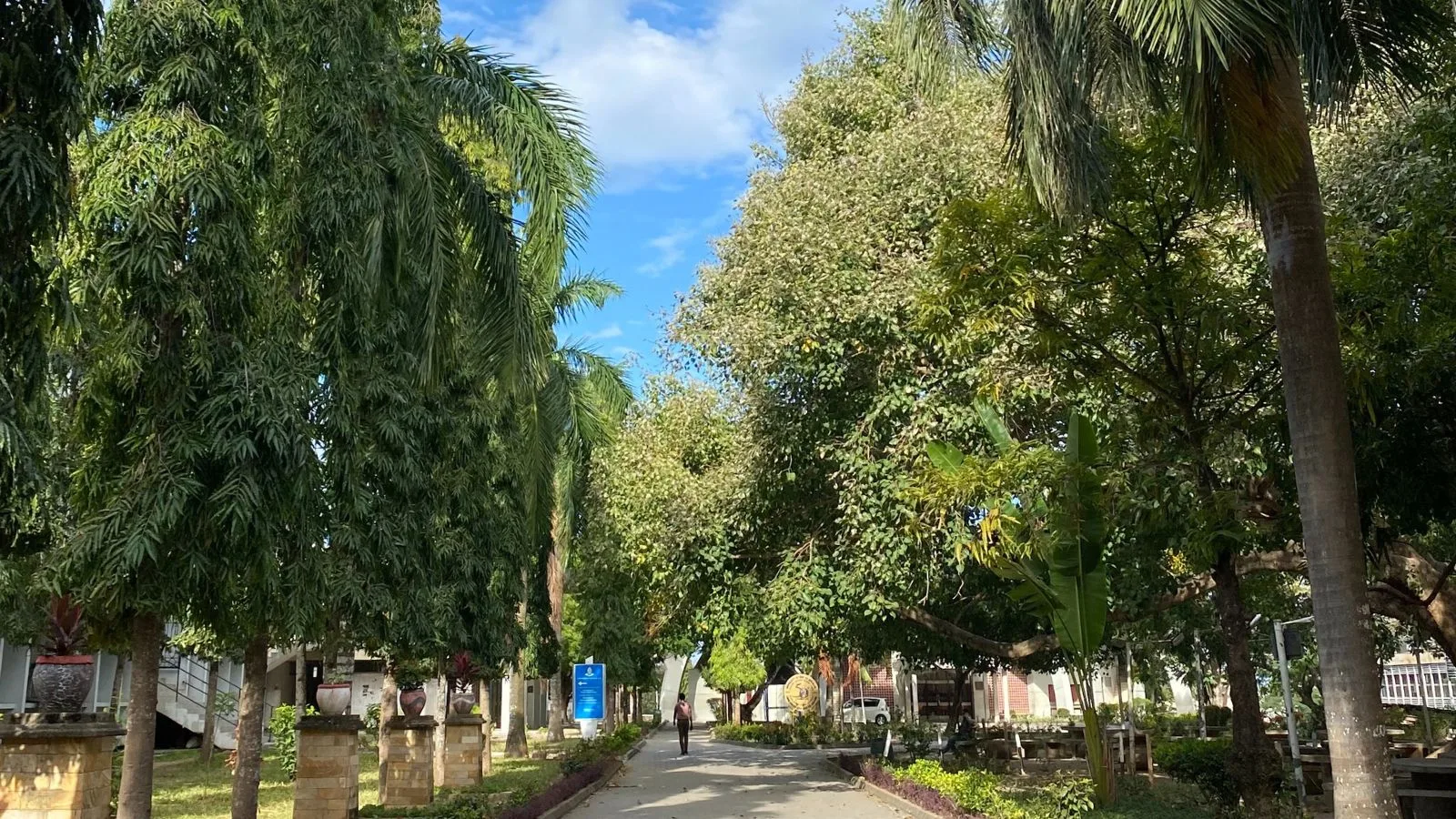
When I wasn’t meeting with these actors and organisations, I spent time on the beautiful, green campus of the University of Dar es Salaam, where I was kindly hosted by Professor Bernadeta Killian. Overall, the pilot trip was a deeply enriching and rewarding experience, both academically and personally. Looking back, several important reflections emerge:
- The value of physical presence and of building rapport
Having a physical presence in Tanzania made it much easier to connect with different actors on the ground, and I found building trust and relationships in person (rather than online) to be much easier. I found I was able to develop a strong and friendly rapport with actors more organically by simply sitting down together and talking in person, rather than through a screen.
I benefited tremendously from being connected to additional actors in Tanzania through a selective snowball-sampling process, which significantly expanded my network. These connections also deepened my understanding of the context, as many took place through more informal, conversational interactions beyond formal meetings. In practice, WhatsApp proved to be a far more effective communication tool than email, as it felt more immediate and better suited to the busy schedules of the practitioners I was engaging with.
- The importance of planning for flexibility
Throughout my visit, I realised that while planning is an essential and fundamental part of fieldwork, it is equally important for research practice to remain flexible and able to accommodate change, including being open to last-minute opportunities and unforeseen entry points for engagement.
Remaining open and flexible allowed me to connect with groups I hadn’t initially targeted. This was truly beneficial to the research process, as I gained invaluable additional insights that have reshaped the overall study.
By embracing flexibility, I was also able to more intuitively foster my own curiosities, allowing me to pursue what I found most compelling and making the process both engaging and rewarding.
- The significance of language and the politics of inclusion
Although Swahili is Tanzania’s official language, English was widely used by many of the practitioners and actors I engaged with. Before the trip, I made an effort to learn some basic Swahili phrases, both as a small gesture of respect and as a way of approaching my time in Tanzania with care and attentiveness to both language and place.
Once I arrived and began running the pilot research, I quickly realised that the greater challenge was not my limited grasp of Swahili, but rather navigating the specialised language of development cooperation. While I had previously reflected on this in relation to positionality, seeing how it impacted research practice was striking.
On one hand, when speaking with large international NGOs as well as those more visible and prominent national CSOs, I found that we used more ‘technical’ terminology associated with both development studies and practice. On the other hand, when engaging with smaller grassroots organisations, I found myself avoiding such ‘jargon’, instead using more accessible terms and phrases.
This prompted me to think more critically and expansively about my own positionality as an academic researcher, particularly when engaging with a highly professionalised field such as development, and about the ways in which language shapes interactions and influences both the inclusion and exclusion of specific actors, often marginalising voices that are vital to the research.
- The unexpected utility of a field journal
One constant companion on the trip came in the form of a field journal, which was a thoughtful gift from a kind colleague. I used it daily to jot down notes from interactions, which I would later type up, as well as to record any reflections I had at the end of each day. I found this practice of journalling to be a valuable tool for both immediate note-taking and ongoing personal reflection. Looking back over these entries after returning to Ireland, I was struck by the details I might have otherwise forgotten, had I not taken the time to write them down in the field.
Revisiting and refining the research focus:
By far, the most valuable aspect of the visit was the space, time, and opportunity it created to consider the situated nature of my research and to consider its future direction and focus.
During my time in Tanzania, I came to see the role of rights-based CSOs in particular as deeply contested, an issue I now consider integral to my broader question about how organisations come to collaborate and cooperate.
I was particularly interested in how these organisations were navigating the intersecting dynamics of an increasingly restrictive national civil society environment and the geopolitical shifts reshaping the field of development cooperation.
In light of this, I’ve since begun to reformulate my research aim, objectives, and questions, migrating away from some of my original sectoral interests. This shift has been driven by a growing confidence and renewed enthusiasm emerging from my experience of conducting pilot research in the field and from sustained engagement with actors in context.
Returning home:
I returned to Dublin in the autumn feeling inspired and with a renewed sense of purpose in relation to my PhD research. I continue to draw inspiration from having met such a wide range of dedicated individuals working collectively to advance the rights of others, often in extremely challenging contexts.
Those I engaged with during my time in Dar es Salaam were generous with their time, candid about their experiences, and deeply committed to improving lives in their communities.
On a personal note, this visit was reaffirming. It reminded me why I chose to undertake this PhD in the first place: to contribute, even in a small way, to understanding how development might be more inclusive, accountable, and locally grounded.